The Bitcoin Investigation That Refused to Settle: Inside Finding Satoshi’s Four-Year Evidence Trail
A four-year, evidence-led investigation with on-camera interviews from Bill Gates, Michael Saylor, Joseph Lubin, and Fred Ehrsam arrives this month. The filmmakers thought they had an answer multiple times. Each time, they kept digging until the evidence held.
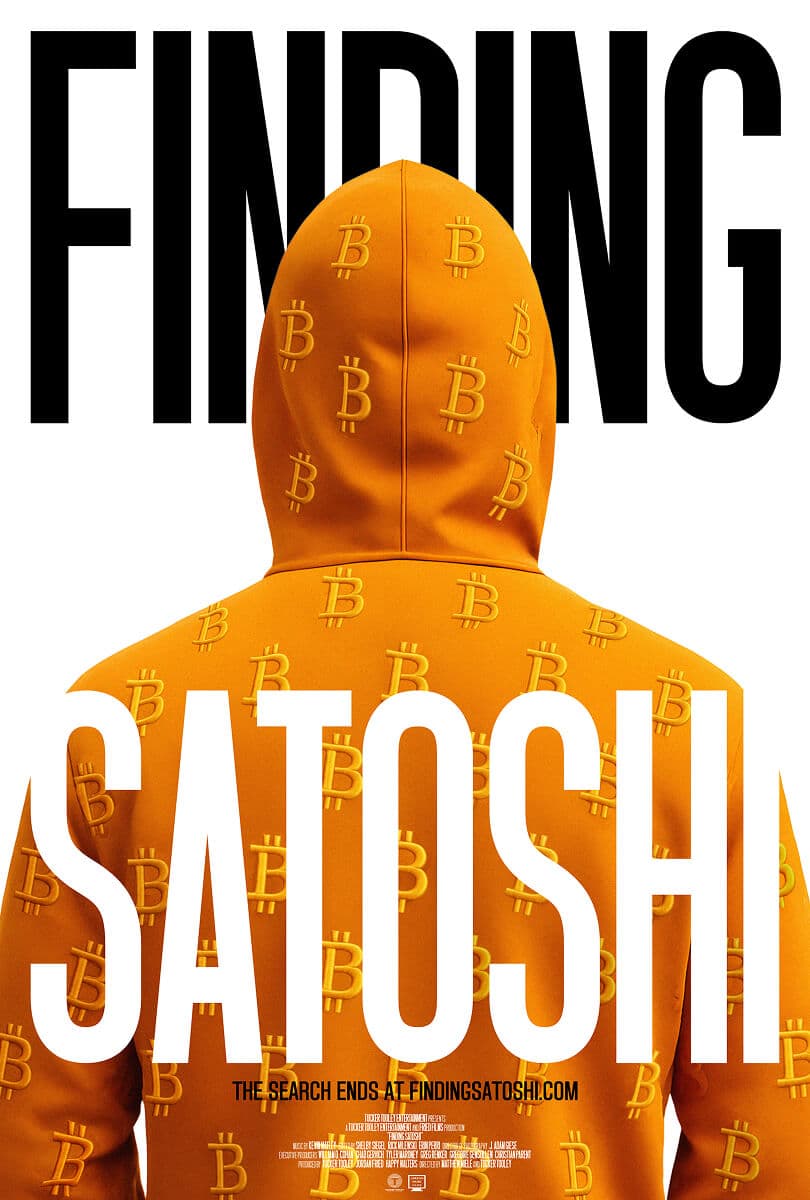
Bitcoin has existed for close to two decades. Its creator has never been identified. Roughly one million bitcoin sit in wallets attributed to that creator, untouched since 2011. At current prices the stack is worth north of one hundred billion dollars. It is one of the single largest unresolved financial stories of the modern era, and it has been sitting in plain sight for nearly as long as smartphones.
In that window, major outlets have produced substantive Satoshi reporting. Newsweek on Dorian Nakamoto in 2014. Wired and Gizmodo on Craig Wright. Pieces from the New York Times, Bloomberg, and The Economist at various points. Those were serious assignments taken on by serious reporters, and none of them produced a conclusion the crypto community broadly accepted.
What Finding Satoshi is, and what sets it apart, is not the scale of the ambition. Plenty of journalists have aimed to identify Satoshi. It is the methodology: four years of evidence-led field work, a willingness to revise the working hypothesis every time new data broke it, and the discipline to keep digging instead of settling. The filmmakers thought they had the answer multiple times. They were wrong multiple times. Each time they kept going. At the end of four years, they walked out with a conclusion they were willing to put on camera. The film is called Finding Satoshi, and it arrives this month.
Available this month at findingsatoshi.com
The interview roster is the story
Most crypto documentaries run on stock footage of trading floors, price charts, and archival news clips. Finding Satoshi runs on primary-source testimony from the people who were actually in the room during the years the story got made.
Bill Gates is on camera. Michael Saylor, who committed MicroStrategy’s balance sheet to Bitcoin and has read the white paper more times than most of its critics, is on camera. Joseph Lubin, co-founder of Ethereum and ConsenSys, is on camera. Fred Ehrsam, co-founder of Coinbase, is on camera. Twenty-plus early Bitcoin developers, cryptographers, and on-chain investigators who have been inside this story since 2011 round out the roster.
The roster alone is a differentiator. No piece of journalism on Bitcoin’s founder has assembled a comparable set of voices in a single work. The filmmakers earned that access by doing the thing that turns out to be genuinely hard: showing up repeatedly over years, and staying rigorous enough about the evidence that the people being asked to go on camera could see the work was serious.
By the Numbers
Bitcoin attributed to Satoshi, untouched since 2011
Early developers and investigators on camera
Of forensic investigation, three continents
The missing layer: cypherpunks, not price charts
Every prior Bitcoin documentary opens on a price chart. Finding Satoshi opens on the 1993 Cypherpunks Manifesto. That single structural choice is the editorial argument of the entire film. The story of Bitcoin did not begin in 2008 when the white paper was posted to a cryptography mailing list. Its cultural roots trace back to the early 1990s, when a subculture of cryptographers started publishing papers that described, piece by piece, the tools Bitcoin would eventually be assembled from.
The film walks the viewer through the actual lineage. Hashcash. B-money. Bit Gold. The mailing list posts. The incremental papers. The decade of unpaid, nearly unread research that made the white paper legible to the handful of people who could parse it the day it appeared. Joseph Lubin and Fred Ehrsam explain the cultural line from 1993 to 2008 with the casual precision of people who lived inside it.
This is the layer finance-adjacent coverage has tended to compress into a footnote, and the reason is structural rather than malicious. Daily finance coverage watches price. The primary-source cryptography work predates the first Bitcoin price discovery by well over a decade. A reporter covering the Bitcoin beat from a Bloomberg terminal has no standing reason to ever encounter the Cypherpunks Manifesto, and absent that encounter the origin story collapses into a three-paragraph prologue. Finding Satoshi is the first feature-length film that treats the prologue as the story.
“One of the biggest unresolved financial stories of the modern era has gone nearly two decades without a singular, sustained investigation. A small independent film crew was the first to commit to one.”
The silence that is evidence
Roughly one million bitcoin sit in wallets widely attributed to Satoshi. They have not moved. Not in 2013, when the first mainstream Bitcoin coverage sent the price past one thousand dollars for the first time. Not in 2017, when the retail mania crossed twenty thousand. Not in 2021, when institutional allocation pushed it past sixty thousand. Not at the January 2024 spot ETF approval, the most liquid on-ramp in the history of the asset. At no point, across four separate multiples of generational wealth, did the earliest wallets show any activity at all.
Finding Satoshi argues, and the argument is the load-bearing editorial claim of the film, that the stillness is not random. It is a design choice. Every other founder of every other monetary architecture in human history has a face, and the face is a pressure point. Regulators can subpoena it. Courts can compel it. Adversaries can threaten it. Bitcoin was architected from the beginning to remove that pressure point, and the removal has never stopped being load-bearing. The filmmakers call the argument vanishing reconsidered. The vanishing is not eccentricity. It is the single most important structural decision in the system.
The film builds its conclusion on that silence. Four years of forensic work, on-chain analysis, timestamp reconstruction, and primary-source testimony, all anchored to the fact that the coins have never moved and the architecture was designed so that the absence of a face was the point.
Full 92-minute documentary, available this month at findingsatoshi.com
Inside the obsession loop
The second half of the film turns the camera around. The investigators, some of whom have been inside this mystery for more than a decade, become the subject. The filmmakers sit down with them and ask what it does to a person to spend eleven years chasing a conclusion that may never arrive.
One researcher, on camera, says flatly that he is no longer sure he wants to find the answer. He is sure he wants to keep looking. The psychology of chasing an unresolvable mystery is its own subject. Every clue is a dopamine hit. Every near-miss is a hit. Every dead end feels like information. The loop is self-reinforcing, and after four years of filming the investigators the filmmakers admit on camera that they are inside the same loop.
This is the section that separates Finding Satoshi from everything else in the genre. It is not a finance film. It is a character study of the people who have spent the most time looking, and it earns its conclusion because it is honest about what looking costs.
Why this is likely to become the most-rigorously-sourced Bitcoin film on record
A careful prediction: Finding Satoshi stands to become one of the most-cited primary-source films on the Satoshi question. Not because of marketing spend. Because no other work on the subject has combined this interview roster, this timeline depth, this forensic methodology, and this willingness to follow the evidence, including the discipline to discard working hypotheses multiple times along the way, in a single piece.
The finance-adjacent outlets that have produced Satoshi reporting over the last decade will, predictably, cover Finding Satoshi as a follow-on story. They will interview the filmmakers. They will analyze the conclusion. And every one of those pieces will be transparently downstream of a ninety-two-minute independent film that did what is genuinely hard on this subject: stayed evidence-led long enough, and disciplined enough, to defend an answer.
How to watch
Finding Satoshi runs ninety-two minutes. It is available now at findingsatoshi.com, with the trailer, filmmakers’ note, and release-date signup on the official page. The people who watch the film inside the first thirty days will be the people who frame the conversation that follows it. The people who wait will be reading other people’s takes on what it said.
Official site: findingsatoshi.com
Editorial disclosure. Zenben is reader-supported. Links in this article are tracked affiliate links. When a reader clicks through and completes a purchase, Zenben may receive a commission at no additional cost to the reader. Commercial relationships do not influence editorial judgment. Nothing in this article constitutes financial, investment, tax, or legal advice. Digital asset investments can lose value, including their entire value.
Nothing in this article identifies, or implies identification of, any specific individual as Satoshi Nakamoto. Zenben takes no position on the identity of the Bitcoin creator. Claims regarding the interview roster, investigative methodology, and runtime of the film reference publicly available materials from the production.
© 2026 Zenben. All rights reserved.